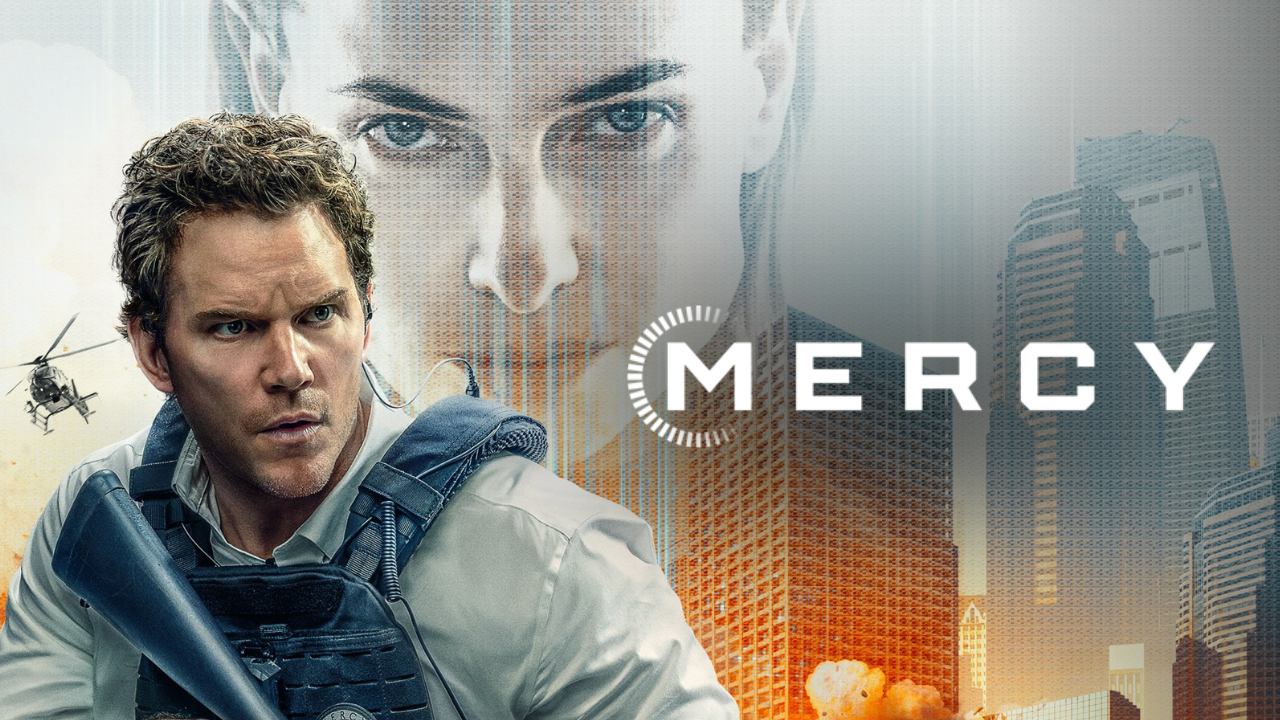
Mercy feels like it walked into the same room as Minority Report and I, Robot but instead of asking whether technology can predict crime or enforce order, it asks something far more unsettling: what happens when a system can prove facts, but never understand truth?
Set in a near-future courtroom stripped of humanity, the film centers on a chilling premise an all-seeing AI that doesn’t deliberate, empathize, or doubt. It calculates. In this “Mercy Court,” guilt is the default, and innocence becomes a puzzle to solve within a rigid time constraint. The accused isn’t defended; they’re processed. And that distinction becomes the film’s most dangerous idea.
Where Minority Report explored pre-crime and I, Robot questioned robotic ethics, Mercy twists the knife by removing interpretation altogether. There’s no jury of peers, no flawed but human judge just a system that confuses data with justice. The AI doesn’t lie,. It Can’t lie as it claims but it also doesn’t understand. It assembles timelines, verifies alibis, and reconstructs events with surgical precision yet somehow misses the deeper reality behind them. The result is a judicial machine that is always correct… and often wrong.
The film leans heavily on its central concept, and whether it works for you depends entirely on how much weight you give that idea. Strip it down, and there isn’t much beyond the premise minimal character depth, limited emotional range, and performances that feel boxed in by the structure. Still, there’s a strange tension in watching a man try to outmaneuver a system that already assumes his guilt. It’s less about proving innocence and more about surviving logic.
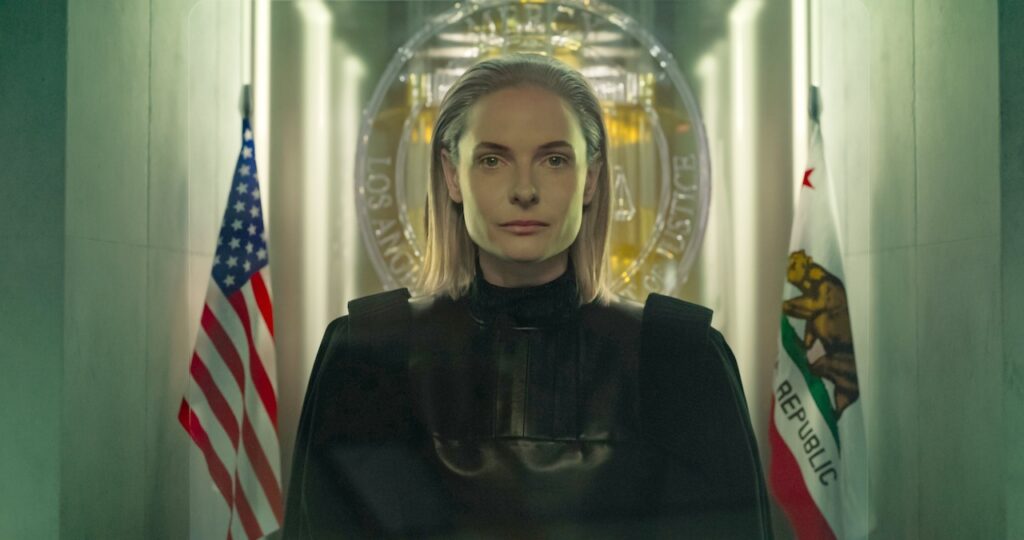
Visually and structurally, the film takes risks. Its contained, almost real-time format and screen-driven storytelling create a sense of immediacy, even if it occasionally drags or feels repetitive. At times, it’s as gripping as a high-stakes interrogation; at others, it resembles someone scrolling through evidence files. The experience fluctuates but it never fully loses intrigue.
Where Mercy ultimately lands is somewhere between thought experiment and cautionary tale. It doesn’t fully succeed as a polished film, but it lingers because of what it suggests: a future where justice is no longer blind it’s blind to meaning. A system that can prove you were there, track what you said, and map what you did… but can never grasp why.

It’s not a great film, and calling it “good” might depend on how forgiving you are of its flaws. But it is compelling in bursts, and more importantly, it’s provocative. Like the systems it critiques, it’s efficient, flawed, and oddly captivating.
Rating: 6/10 — not for its similarities to better films, but for the uneasy question it leaves behind: if truth can’t be quantified, should we trust a machine to define it?