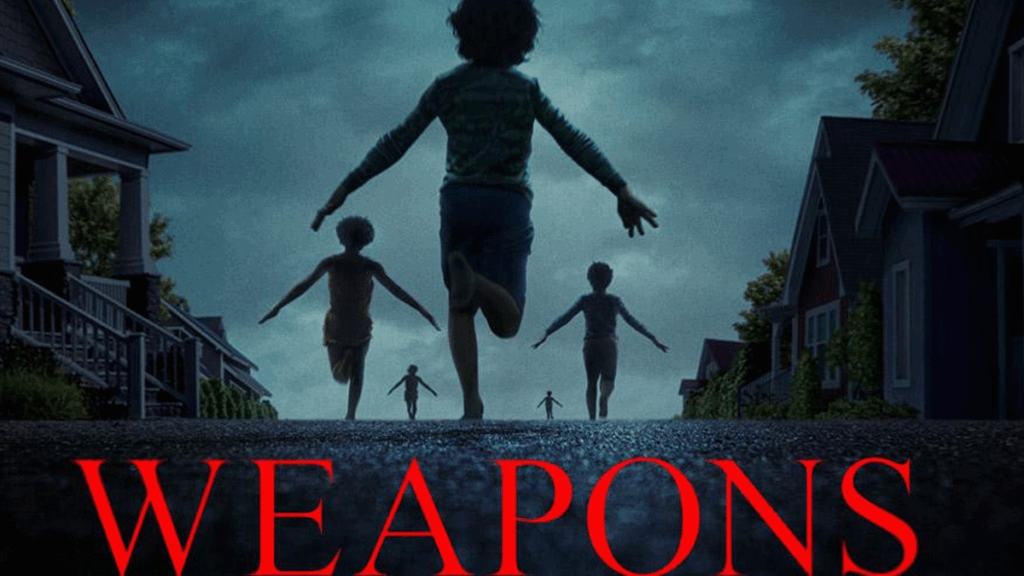
When I went to see Weapons, I honestly wasn’t sure what to expect. I had heard a little bit of buzz, saw the trailer but I had no idea what the film was about. Only that it looked intriguing. Back in the day I used to be a huge horror movie fan. Now, not so much. S, when I went to see it nothing could have prepared me for how gripping the experience would be. From the very beginning, the film pulls you in with an unsettling atmosphere, and then it keeps shifting in ways that caught me off guard again and again.
The story begins with an eerie, unforgettable premise: precisely at 2:17 a.m., seventeen third-graders from the same classroom vanish without a trace, leaving behind a small town besieged by fear and suspicion Only one student, Alex Lilly, remains a haunting image that sets off a chain of haunting mysteries and emotional unraveling

What I found most compelling was how the film unspools through multiple, contrasting perspectives the ostracized teacher Justine (Julia Garner), a grieving father Archer (Josh Brolin), the beleaguered cop Paul (Alden Ehrenreich), the anxious principal Marcus (Benedict Wong), and the outsider James (Austin Abrams) Each viewpoint recontextualizes the same events, building suspense like layers of ice forming around a flickering flame. Julia Garner delivers a performance that walks the razor’s edge between fragile vulnerability and simmering tension her Justine is someone unable to escape the weight of communal suspicion, teetering on the brink of despair and something darker.
Josh Brolin (Marvel’s Avenger’s Infinity War, Sicario, Only the Brave, No Country for Old Men and Deadpool 2) grounds the chaos with fierce realism, and always does a stellar performance regardless of what role he’s in. His gripped, guilt-laden Archer feels almost palpable in his frantic search for answers. Cary Christopher, as Alex, is minimalistic, raw, and achingly authentic, keeping the film anchored.
The pacing and style of Weapons are masterfully disorienting. Non-linear storytelling reframes each scene, allowing suspense to rebuild repeatedly with fresh tension. There are sudden comedic touches surprising chases or offbeat humor that snap you out of your seat, only to plunge you back into creepy moments later. The cinematography is precise and eerie, quiet school halls feel ominous, suburban homes seem slivers away from collapse, and once-safe daylight becomes just as nerve-wracking as any dark basement.
And then there’s the house. Alex’s home, with its windows boarded, interiors dim, and atmosphere suffocating. It’s not just a haunted location; it’s a nesting ground for something incredibly disturbing. (Think Salem’s lot 1977) When it becomes the epicenter of horror, harboring the missing children in a zombified state under Aunt Gladys’s control, it elevates the dread to an almost mythic level.
The supernatural reveal is powerful: Gladys, Alex’s seemingly benign great-aunt, is a witch who uses dark rituals, collecting hair and personal items to control adults and draw children to the house for sustenance for her lifespan. The climax is a stunning turn: Alex uses one of Gladys’s enchanted sticks, wrapped in her own hair, to reverse the spell. The children break free and, in a gut-wrenching, cathartic moment, violently pursue and destroy their tormentor.
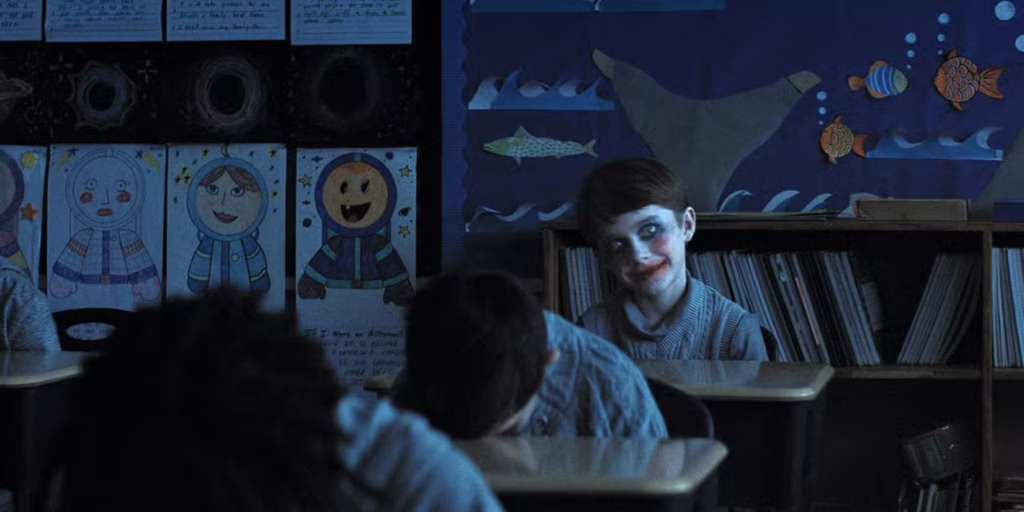
The victory, however, comes at a heavy cost. The battle leaves countless adults dead, their lives consumed in the frenzy of breaking the curse. Though the children are freed, the experience leaves visible scars, haunted eyes, fractured trust, and silence that words can’t easily mend. Alex himself is placed in the care of a more compassionate relative after his parents are committed, their minds broken by what has happened. Some of the children slowly find their voices again, but the film resists the temptation to wrap things up neatly. Instead, it lingers on the unsettling truth that survival does not always mean healing.